Friday Quiz:Book of Mormon Question–A Question Of Time

[QUIZZIN 8]

Posted in Gospel Quiz | Leave a comment

Friday Quiz: How Are We Reconciled to the Father?

Can you complete the following Book of Mormon scripture to answer the question: how are we reconciled to the Father?

Wherefore, beloved brethren, be reconciled unto him…

Click here for the answer.

Posted in Gospel Quiz | Leave a comment

The Priesthood Ban for Dummies

Click here for Table of Contents

One of the Bloggernacles’ frequent topics is the priesthood ban. I haven’t paid much attention to this issue because it was resolved in 1978; at least that’s how I see it. But for others; many who weren’t even born, or were children in 1978, the priesthood ban seems to be a source of difficulty—a stumbling block to their faith.

Before moving forward, I don’t claim to have any special insight into this subject. My sources are the scriptures and the words of the living prophets—sources all church members have available to them. If someone can use the scripture to show me that what I’ve written is in error, I invite them to do so; I am interested in the truth.

First, a few question to orientate our thinking:

1. Who is the head of the church?

For believing members there can only be one answer—Jesus Christ (3 Nephi 27:8).

2. Does the Lord inspire and lead His chosen prophets?

The scripture answer this question in the affirmative. (1 Nephi 22:2, Amos 3:7).

3. Can a prophet of the Lord err—be fallible?

The scriptures give clear understanding they can, and have. (D&C 1:24-28).

4. Will the Lord permit a fallible prophet to frustrate His will?

No.

The works, and the designs, and the purposes of God cannot be frustrated, neither can they come to naught. D&C 3:1

5. Has the Lord intervened when a prophet erred on an important doctrinal matter because of the culture they lived in?

Yes, Peter was taught by the Lord in a dream/vision to take the gospel to the Gentiles (Acts 10:9-16). This was contrary to Jewish culture, and the Saviors own teachings when He was with His disciples (Matt 10:5-6).  He told them not to go to the Gentiles, but now the Lord was sending the gospel to all men. The Lord intervened at this time because it was His will that the Gentiles receive the gospel.

Summary

Based on these scriptures, it reasonable to believe the Lord could have intervened to overrule the ban on blacks and the priesthood early in church history, but it wasn’t His will to do so until 1978.

The ban isn’t the central issue—in my opinion. The central issue is understanding how the Lord works with His fallible prophets to accomplish His will. I believe the Lord is very close to His prophets. He isn’t an absentee Deity. I don’t see any reason, based on the scriptures, to conclude the Lord’s will is ultimately frustrated because of fallible prophets. That would be equivalent to the tail wagging the dog.  The history of the priesthood ban doesn’t need to be a difficult subject to deal with. This is especially true for those who have studied the scriptures and thereby understand the “dealings” of the Lord.

Conclusion

The priesthood ban will continue to be a controversial part of church history for some members. I hope those who fall into that camp will have their testimonies grounded and rooted in gospel essentials. If they do, then they will be safe while they wait on the Lord to answer their prayers regarding this aspect of church history.

Click here for Table of Contents

Posted in Book: Alive in Christ, Church History, Priesthood | Tagged , , | Leave a comment

Friday Quiz: Does Suffering Bring Forgiveness?

Before clicking the following link, I hope you will take a piece of paper and write down your answer, and then write a sentence or two explaining to yourself why you answered as you did.

[QUIZZIN 12]

Posted in Gospel Quiz | Leave a comment

Friday Quiz: Book of Mormon Question

[QUIZZIN 13]


Posted in Gospel Quiz | Leave a comment

Friday Quiz: Easy Book of Mormon Question

The Book of Mormon contains the word “Christ”  319 times according to my computer search.  It appears on the first page (preface), where does it appear next?

A.  1 Nephi 1:7

B.  1 Nephi 15:5

C.  2 Nephi 10:3

D.  Jacob 4:2

Note: I hope you will make a guess before your look it up.

Posted in Gospel Quiz | Tagged | 2 Comments

Quotes from General Conference–Three of my Favorite

Today the church put up the written version of the talks given during the most recent General Conference. Following are three quotes from my personal favorites.

Did you have a favorite? If so, how about sharing it.

I am convinced that there is no simple formula or technique that would immediately allow you to master the ability to be guided by the voice of the Spirit. Our Father expects you to learn how to obtain that divine help by exercising faith in Him and His Holy Son, Jesus Christ. Were you to receive inspired guidance just for the asking, you would become weak and ever more dependent on Them. They know that essential personal growth will come as you struggle to learn how to be led by the Spirit…The inspiring influence of the Holy Spirit can be overcome or masked by strong emotions, such as anger, hate, passion, fear, or pride. When such influences are present, it is like trying to savor the delicate flavor of a grape while eating a jalapeño pepper. Both flavors are present, but one completely overpowers the other. In like manner, strong emotions overcome the delicate promptings of the Holy Spirit.  Elder Richard G. Scott, To Acquire Spiritual Guidance, Oct 2009 General Conference

—————————————————————————————————————————

We read again and again in the Bible and in modern scriptures of God’s anger with the wicked and of His acting in His wrath against those who violate His laws. How are anger and wrath evidence of His love? Joseph Smith taught that God “institute[d] laws whereby [the spirits that He would send into the world] could have a privilege to advance like himself.” God’s love is so perfect that He lovingly requires us to obey His commandments because He knows that only through obedience to His laws can we become perfect, as He is. For this reason, God’s anger and His wrath are not a contradiction of His love but an evidence of His love. Every parent knows that you can love a child totally and completely while still being creatively angry and disappointed at that child’s self-defeating behavior. Elder Dallin H. Oaks, Love and Law, Oct 2009 General Conference

————————————————————————————————————————

We’ve all felt anger. It can come when things don’t turn out the way we want. It might be a reaction to something which is said of us or to us. We may experience it when people don’t behave the way we want them to behave. Perhaps it comes when we have to wait for something longer than we expected. We might feel angry when others can’t see things from our perspective. There seem to be countless possible reasons for anger…To be angry is to yield to the influence of Satan. No one can make us angry. It is our choice. If we desire to have a proper spirit with us at all times, we must choose to refrain from becoming angry. I testify that such is possible.  President Thomas S. Monson, School Thy Feelings, Oh My Brother, Oct 2009 General Conference

Posted in Teachings of the Prophets | Leave a comment

Commentary on 2 Nephi 31:17

Wherefore, do the things which I have told you I have seen that your Lord and your Redeemer should do; for, for this cause have they been shown unto me, that ye might know the gate by which ye should enter.  For the gate by which ye should enter is repentance and baptism by water; and then cometh a remission of your sins by fire and by the Holy Ghost. 2 Nephi 31:17

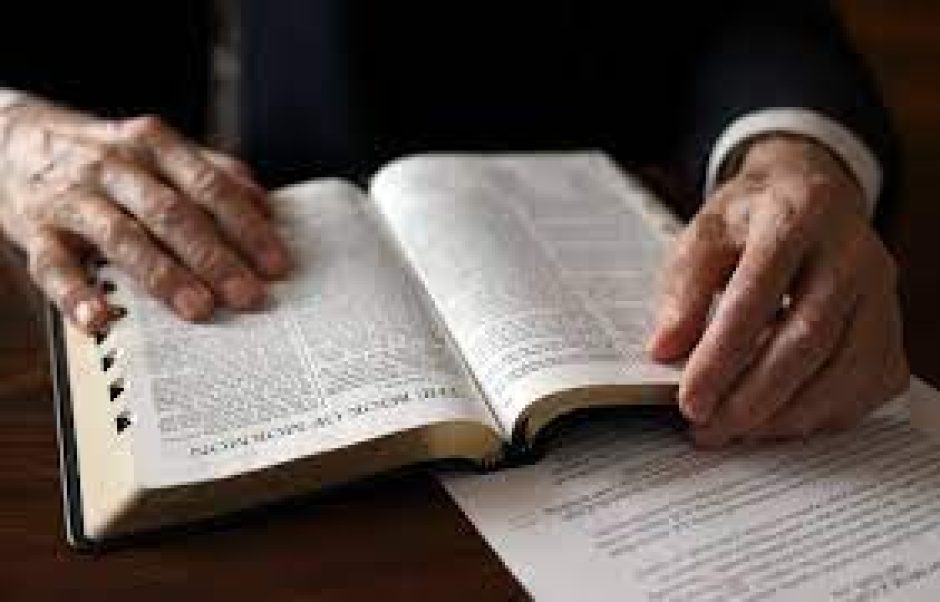
“…do the things which I have told you I have seen that your Lord and your Redeemer should do; for, for this cause have they been shown unto me…” Apparently, Nephi was shown in vision some, or all of the life of the Savior[1].  He admonishes the reader to do the things your Lord and your Redeemer should do. In other words, we are invited to follow in the footsteps of the Savior.

“…that ye might know the gate by which ye should enter…” The word gate, as used in this verse, means entrance. What is it we’re entering? I answer: a relationship with Jesus Christ—our Lord and Redeemer, through the gift of the Holy Ghost.

“…the gate by which ye should enter is repentance and baptism by water; and then cometh a remission of your sins by fire and by the Holy Ghost.” The gate he describes is familiar to all members of the church:

1. Repentance—there are various kinds of repentance. As the apostle Paul points out, there is a worldly sorrow sort of repentance that is not acceptable to God. This kind of repentance needs to be repented of. Then there is Godly sorrow repentance that leads to salvation (2 Corinthians 7:10). Worldly sorrow vs. Godly sorrow:

Worldly Sorrow

“Repentance means more than simply a reformation of behavior. Many men and women in the world demonstrate great willpower and self-discipline in overcoming bad habits and the weaknesses of the flesh. Yet at the same time they give no thought to the Master, sometimes even openly rejecting Him. Such changes of behavior, even if in a positive direction, do not constitute true repentance.” President Benson, Ensign, October 1989, p. 2.

Godly Sorrow

Godly sorrow is a gift of the Spirit. Those who receive this gift suffer “very real mental and spiritual anguish”. The scriptures refer to this as a “broken heart and a contrite Spirit” (See 2 Nephi 2:7). Such a Spirit is the absolute prerequisite for true repentance.

2. Baptism by water—is a priesthood ordinance. By receiving ordinances by those having authority; the power of Godliness is manifest to men in the flesh. (D&C 84:20-21).

3. Remission of sins by fire and the Holy Ghost—the prophet Joseph Smith taught that baptism by water is but half a baptism, and is good for nothing. To receive a complete baptism requires baptism of water, and of the Holy Ghost[2].

When followers of Christ enter the covenant of baptism the Lord in turn gives the supernal gift of the Holy Ghost to those who diligently seek for it (1 Nephi 10:17). Then in the time, the Lord gives the additional blessing of receiving a remission of sins by fire and the Holy Ghost. This is a two part process for most church members (2 Nephi 31:13).

Receiving a remission of sins fulfills the baptism covenant. Justification and sanctification are gospel terms that now have meaning. Based on my experience and understanding the recipient is in a state of grace; having been justified by the atoning blood of Christ. It is also a sanctifying experience, but it is important to understand that sanctification is not total. The recipient needs to retain their remission of sins (Mosiah 4:12,26).

Summary

I rarely hear church members testify of the things I’ve written about in this post. When was the last time you recall hearing a church members testify of diligently seeking for the gift of the Holy Ghost?

I mostly hear of Spiritual experiences that come in the form of comfort and help when a member is suffering from the death of a loved one, job loss, health problems, a wayward loved one, and etc. The Lord really does bless church members with these kinds of concerns.

Church members fast and pray for many things, but it appears (based on listening to members speak of their experiences for many years) that few fast and pray specifically for the gift of the Holy Ghost, and a remission of their sins by fire and the Holy Ghost.

My experience with obtaining a remission of sins came when I plead with the Lord to forgive me of my sins. I specifically asked with great intensity, fasting and praying, to be forgiven of my sins. After suffering much in both body and spirit the blessing came!

Since that day, I have been studying the scriptures, the Book of Mormon in particular, and the words of the prophets of the restoration to help me understand what I experienced.

I count the Lord as my friend because of the things I experienced when He extended His tender mercies to me at a time of great need. Click here for a more complete account.


[1] Elder Haight experienced a vision wherein he saw the life of the Savior. Click here.

[2] “You might as well baptize a bag of sand as a man, if not done in view of the remission of sins and getting of the Holy Ghost. Baptism by water is but half a baptism, and is good for nothing without the other half—that is, the baptism of the Holy Ghost” History of the Church, 5:499
Posted in Doctrine of Christ, Scripture | Leave a comment

Commentary on 2 Nephi 31:13

Not all scripture is of equal value. For example, as valuable as the vision of the three degrees of glory is, it pales in importance to scripture that teach the doctrine of Christ. Why? The doctrine of Christ reveals truths that allow us to access the power of the atonement of Christ. The vision of the three degrees of glory is explanatory. One saves, and the other explains. In other words, a starving man would find more help in a hand full of rice than he would in a cook book about rice.

The following verse of scripture provides those who hunger for salvation in the Kingdom of God a hand full of doctrine to get them started in the right direction.

Wherefore, my beloved brethren, I know that if ye shall follow the Son, with full purpose of heart, acting no hypocrisy and no deception before God, but with real intent, repenting of your sins, witnessing unto the Father that ye are willing to take upon you the name of Christ, by baptism—yea, by following your Lord and your Savior down into the water, according to his word, behold, then shall ye receive the Holy Ghost; yea, then cometh the baptism of fire and of the Holy Ghost; and then can ye speak with the tongue of angels, and shout praises unto the Holy One of Israel. 2 Nephi 31:13

This verse of scripture is forward looking. What one has done in the past isn’t discussed.

It has four parts to it: 1) Desire, 2) Making covenants through the ordinance of water baptism, 3) Receiving the gift of Holy Ghost, and 4) Receiving the baptism of the Spirit.

Desire

The focus of the first part of this verse is on the importance of desire. Nephi uses powerful words to convey this basic idea:

“full purpose of heart”—conveys the idea that one’s heart is committed

“acting no hypocrisy and deception”—tells of the singleness of one’s thoughts

“with real intent”—one’s real intent consist in the harmony of thought and desire

“repenting of your sins”—is an expression of one’s desire to change their life

Making Covenants Through the Ordinance of Water Baptism

“witnessing unto the Father”—acknowledging that Christ is the Son of God and Savior of mankind

Receiving the Gift of the Holy Ghost

“according to his word”—if one meets the aforementioned requirements the Lord will do his part

Receiving the Baptism of the Spirit

“then cometh the baptism of fire and of the Holy Ghost”—born again, remission of sins, sanctification

“speak with the tongue of angels”—inspired speech, speak the words of Christ

Summary

Those who covenant in the waters of baptism to follow Christ and diligently seek for the gift of the Holy Ghost will receive it.

Then as they remain faithful the day will come when they will receive the baptism of the Spirit. The baptism of the Spirit fulfills the baptism covenant. The prophets have said that the most important thing we can do in this life is to receive the gift of the Holy Ghost. This supernal gift is obtained, first and foremost, by having righteous desires (Alma 18:32) as outlined in verse 13. Church callings, commandment keeping, and other qualities of personal performance are not mentioned in this verse as the highest priority for obtaining the manifestations of the Holy Ghost.

One who repents is manifesting his/her desires for righteousness. Hugh Nibley used the following word picture to illustrate this point:

“Who is a righteous man? Anyone who is repenting. No matter how bad he has been, if he is repenting, he is a righteous man. There is hope for him, and no matter how good he has been his entire life if he is not repenting he is wicked. The difference is the way he is facing. The man on top of the stairs facing down is much worst off than the man on the bottom of the stairs facing up. The direction we are facing is what determines if we are good or bad.”

The person at the top of the stairs could represent a church member who is good at keeping the commandments, and has held important positions in the church, but is a “tired saint who is fallen from his first enthusiasm”. But that is another subject: enduring to the end.

Posted in Doctrine of Christ, Scripture | Leave a comment

I’m Going to Shoot Old Joe Smith

The following is taken from a talk given at BYU by Robert H. Daines, 20 June 2000. Click here to read the talk.

The Prophet Joseph was a great exemplar, not only of this principle but also of having total faith and confidence in the promises of the Lord. I should like to share with you an entry from the diary of my great-great grandmother. This is a record of a little-known experience of the Prophet Joseph–little known because this diary was lost for 30 to 40 years in my mother’s home in New Jersey. It was only rediscovered as they were preparing to move back to Utah in the late 1970s. This is a diary entry of Sister Sarah Stoddard. Her son Charles, my great-grandfather, as a boy of 14, was asked by the Prophet Joseph to serve as a houseboy for William Law, an enemy of the Prophet, and to inform him of any of the Laws’ devious plans. It was, I guess, an early form of counterintelligence.

Note the date of the diary entry: April 1844. It was just two months before the Martyrdom of the Prophet.

Dear Diary,

Charles had another faith-promoting experience last night.

Early this morning, even while the darkness still hemmed out the light of the day, Mr. Law, after he had been drinking and planning with his associates through the night, got Charles out of bed to clean and oil his gun. He said he was going to shoot the Prophet, only William Law called him “old Joe Smith.” Poor Charles was frightened beyond description, but Mr. Law stood over him and prodded him with his foot when Charles hesitated through fright and anxiety. Finally, when Mr. Law was satisfied with the way the gun was working, he put one bullet in. (He boasted he could kill the Prophet with one shot.) He sent Charles to bring the Prophet.

He ran as fast as he could and delivered the message, but he begged the Prophet not to go to Mr. Law’s as Mr. Law was drunk and Charles was afraid he would carry through on his threat to shoot the Prophet in cold blood.

As they walked the few blocks from the Mansion House to the Law residence, the Prophet assured Charles that no harm would come to him that day. Charles was frightened, and he said that it kept racing through his mind, “I am the one that cleaned the gun that is going to be used to kill the Prophet,” until he was sick with fear. The Prophet in a final attempt to calm my dear son uttered the fateful words, “Mr. Law may someday kill me, Charles, but it won’t be today.”

As they approached their destination, Mr. Law came staggering out of the house shouting out what he intended to do.

The Prophet said kindly and unafraid, “You sent for me, Mr. Law?” to which Mr. Law replied with oaths that now he was doing the whole a favor by disposing of the Prophet with one shot.

Calmly the Prophet unbuttoned his shirt and bared his chest, then said, “I’m ready now, Mr. Law.” Charles said at this point he nearly fainted. Sick fear strangled him until he was speechless and paralyzed, unable to move a muscle.

Mr. Law paced a few steps, turned, aimed, and pressed the trigger. There was complete silence. Then the air rang with profanity, and Mr. Law turned on Charles, accusing him of fixing the gun so it would not go off and threatening to kill even Charles–my innocent, frightened, but faithful son.

The Prophet, to divert Mr. Law’s blame of Charles, suggested that a can be placed on a fence post for Mr. Law to take a practice shot. Relieved, Charles ran for a can and laid it on its side on the post. Mr. Law paced back, took aim, and fired. His “one shot” streaked through the exact center of the can.

Even Mr. Law was quiet, as if stunned.

The Prophet buttoned up his shirt, gave Charles a meaningful look, and then said, “If you are finished with me now, Mr. Law, I have other things needing to be done. Good morning. [Diary of Sarah Stoddard; text modernized]

I shall ever be grateful for the remarkable example of the Prophet Joseph Smith. He endured faithfully not only to the end of his life but to the end of each one of his many trials. He also demonstrated in this situation total faith and confidence in the promises that the Lord had made to him as well as to righteous men and women everywhere that they would not be taken before their work was completed.

Posted in Church History | Leave a comment