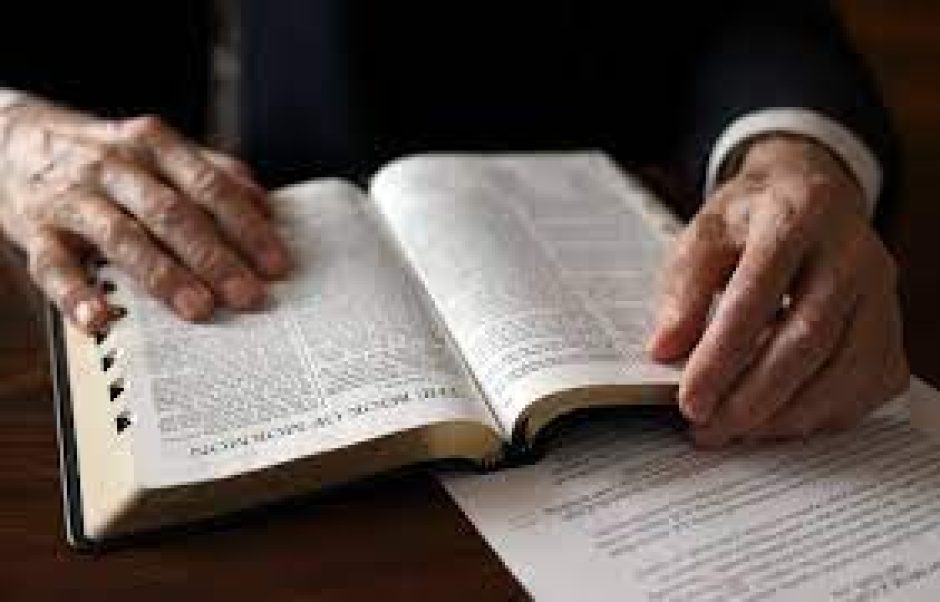
Hugh Nibley’s Faith Crisis Solved by Prayer

Hugh Nibley (1910-2005). There may be some reading this who don’t know much about Hugh Nibley. I got acquainted with him in the 1970’s, attended his class, lectures and had the opportunity to talk with him on a few occasions. For anyone interested in knowing more about him I suggest reading “Hugh Nibley A Consecrated Life” (The Wikipedia piece on Nibley just doesn’t give the reader even the slightest idea of who he was). Those who knew Nibley the best say that there will never be another Nibley. He was a unique personality and faithful follower of Christ.

When Nibley was 26 years old the depression was in full bloom and creating economic challenges for him. In addition he was having questions about the gospel, we might say it was a faith crisis. From his biography:

“Those were desperate time, remembers Hugh. This was not only the Depression, but this was when all the world going bad. He was getting by–it was not easy, nor was it pleasant–but it was a new reality that he felt he had to face. I had been feeling that I would have to be entirely independent and I didn’t want to depend on anybody. That fact left Hugh discouraged. It also led him t see certain flaws in the gospel, as he put it. One Sunday afternoon, he went to Mount Wilson and slogged around in the heavy snow, brooding about theology. I was terribly bothered about this afterlife business and that sort of thing. I had no evidence for that whatever.

That evening, he attended sacrament meeting in the Hollywood Ward with his family. It was Hugh’s first visit since his family had moved into the ward after he went to Berkeley, but he was impressed by the speaker that night: Matthias F. Cowley. Cowley, ordained an apostle in 1897, had resigned under pressure in 1905 and then had his priesthood suspended in 1911 for his adherence to the principle and practice of post-Manifesto polygamy. He returned to full fellowship, though not to his former office, in April 1936…Following the meeting, Hugh’s mother took him up to the front of the meeting hall to meet Brother Cowley. As soon as he took my hand, he said, come with me, Hugh says. He took me into the back room there and he said, I want to give you a blessing. In the blessing, Cowley stated that the Lord was award of his questions and would give me an answer immediately.

Within the week, Hugh was stricken with appendicitis and taken to the Seventh-Day Adventist Hospital in Loma Linda, not far from San Bernardino. Dr. Raymond Weyland, the family physician, was in charge of the operation. When he turned the ether on, Hugh swallowed his tongue and stopped breathing. The staff scrambled for the resuscitator, panicking when it was nowhere to be found. Meanwhile, Hugh could hear everything that was going on…Something big’s going to happen, and sure enough. Then, pop! Then it happened. Then all of a sudden down this thing like a tube, you know, you get sucked down this thing and you come out. [I thought,] Oh, boy, I know everything, and everything is there, and this is what I wanted to know! Three cheers, and all this sort of thing. … All I wanted was to know whether there was anything on the other side, and when I came out there, I didn’t meet anything or anybody else, but I looked around. and not only was in all possession of my faculties, but they were tremendous. I was light as a feather and ready to go, you see.” Hugh Nibley: A Consecrated Life, Pages 114-115.

Years later, reflecting on his Near Death Experience, Nibley said,

[Absolute knowledge of the afterlife] gives me a great relief, so that’s why I don’t take this very seriously down here. We’re just sort of dabbling around, playing around, being tested for our moral qualities, and above all the two things we can be good at, and no two other things can we do: We can forgive, and we can repent. It’s the gospel of repentance. We’re told that the angels envy men their ability both to forgive and to repent because they can’t do either, you see. But nobody’s very clever, nobody’s very brave, nobody’s very strong, nobody’s very wise. We’re all pretty stupid, you see. Nobody’s very anything. We’re not tested on those things, but in the things the angels envy us for — we can forgive, and we can repent. So, three cheers, let’s start repenting as of now. H. Nibley, Faith of an Observer, p. 162.

Posted in Miracles, NDE, Prayer | Leave a comment

Satan Desireth to Have You, That He May Sift You as Wheat

The Savior warned His followers about the power and influence of Satan saying:

Satan desireth to have you, that he may sift you as wheat. 3 Nephi 18:18

Sifting wheat or winnowing is accomplished by throwing wheat into the air and allowing chaff to be blown away, leaving just the grain. From Satan’s perspective, he’d like the good, that is, the spiritual part of men winnowed out leaving just the evil, fallen part of us. That way he can have full power over the hearts of men and women.

The Book of Mormon tells of just such a time. A time when the Jaredites had become so wicked that Satan had full power over the hearts of the people.

But behold, the Spirit of the Lord had ceased striving with them, and Satan had full power over the hearts of the people; for they were given up unto the hardness of their hearts, and the blindness of their minds that they might be destroyed… Ether 15:19

Satan is real and has influence in all of our lives. We have been taught this is particularly true for those who are seeking to follow Christ. Joseph Smith told Heber C. Kimball:

“The nearer a person approaches the Lord, a greater power will be manifest by the adversary to prevent the accomplishment of His purposes.” Orson F. Whitney, Life of Heber C. Kimball (Salt Lake City: Bookcraft, 1967), p. 132.

It is important to remember there are vast numbers of fallen spirits on the earth who seek to deceive and mislead mankind.[1] I believe each of us have encounters with these fallen spirits—more often than we realize. I know by my own experience that evil spirits are about us. Generally we’re unaware of their actual presence by sight, but on one occasion the Lord lifted the veil to teach me that that are real and have power. 

Satan Gives “Revelation”

The fiery darts of the adversary are real. The scriptures use this phrase to help us realize that Satan does indeed have power, and can wield it against us. When the Lord communicates with us we generally refer to it as the whisperings of the Spirit. When Satan communicates with us, I think the phrase, “fiery darts”, is a descriptive metaphor of Satan’s revelatory method.

I’ll give an example of one way this satanic revelatory processed worked on me. As a 7th grader I was learning the ways of the world. My friends and I had learned to “flip the bird”. However, my “bird” didn’t have wings. In other words, it wasn’t as classy as my friends. This troubled me. One morning, as I was waking up, I was “taught” how to slide the fingers on either side of my middle finger into the proper position so I could have a classy bird. My bird now had wings, and I could effortlessly employ it.

Satan can bring ideas into our minds and influence the feelings of our heart just as Heavenly Father does. His “revelations” teach us to become like him, perfectly evil, while Heavenly Father’s revelations teach us to become as He is, perfectly good.

Ways to Know When Satan’s Fiery Darts are Directed at You

I think Brigham Young said something profound when he taught:

In the first place the spirit is pure, and under the special control and influence of the Lord, but the body is of the earth, and is subject to the power of the devil, and is under the mighty influence of that fallen nature that is of the earth.  If the spirit yields to the body, the devil then has power to overcome both the body and spirit of that man, and he loses both. JD, Vol.2, Pg.256, Brigham Young, April 6, 1855

As spiritual beings having a mortal experience we need to understand what Brigham Young is teaching. When we’re born into this world our spirits are pure (D&C 93:38), but our bodies are of the earth (Mosiah 3:19). In addition, we are exposed to influences from two sources: the powers of heaven and hell. In short, the powers of heaven entice us to follow God, and the powers hell entice us to follow Satan.

Following is a list that provides some general ideas to help us determine when we might be experiencing the fiery darts of the adversary. Before you read this list I want to go on record as saying that I’m not suggesting that every time a person experiences something on this list that Satan is the cause. That would be like saying that every time someone has a stomach ache they are experiencing cancer pain. But if stomach pain or the things on this list become a daily event, then caution should be taken.

Discerning the spirit of Satan versus God

1. You feel unhappy, depressed, confused, and frustrated. Vs. You feel happy and calm.

2. You feel heavy, full of darkness. Vs. You feel full of light.

3. Your mind is muddled. Vs. Your mind is clear.

4. You feel empty, hollow, and cold inside. Vs. Your bosom burns with love for the Lord and for others.

5. You feel selfish, possessive, self-centered. Vs. You feel generous.

6. Everything anyone does bothers you. Vs. Nobody can offend you.

7. You are always on the defensive. Vs. You are very forgiving and kind.

8. You become discouraged easily. Vs. You feel confident in what you do.

9. You become secretive, evasive. Vs. You don’t mind anyone seeing what you are doing

10. You want to be alone. You avoid others — especially family members. Vs. You feel outgoing, anxious to be with others

11. You are envious of what others do and what they have. Vs. You are glad when others succeed.

12. You want to get even and show others up. Vs. You want to make others happy, even those opposed to you.

13. You are critical of others, especially family members and those in authority. Vs. You bring out the best and say the best about others.

14. You feel hesitant, unworthy, and unwilling to perform Church ordinances. Vs. You gladly and willingly perform Church work.

15. You don’t want to pray or read scriptures. Vs. You feel like praying and reading the scriptures.

16. You find the commandments of God and rules of the family bothersome, restricting, or senseless. Vs. You wish you could keep all the Lord’s commandments.

17. You become a slave to your appetites; your emotions become passionate; over indulgence in food, sleep, sex, stimulating entertainment, loud music, strong anger, outspokenness all become part of your character. Vs. You feel you have control of your appetites and emotions: food and sleep in moderation, sexual restraint, recreation that is wholesome and moderate; you are calm and control your speech; you feel no anger.

18. You want to make sure all the help you give others is duly noted by them and the world. Vs. You feel a deep desire to help othersusually in a way no one else will know about.

19. You look for and find evil in others and broadcast it. Vs. You speak and think only good about others.

20. You question others’ motives and secretly delight in their problems, and say, “I’m glad I’m not that way.” Vs. You feel sorrow when others have problems and sincerely desire to help them.

This list was adapted from a talk given by John H. Groberg, of the Seventy, given at BYU June 15, 1982. It was titled, Investing for Eternity.


[1] He is here, mighty among the children of men. There is a vast number of fallen spirits, cast out with him, here on earth…there are many evil spirits among us, and they labor to overthrow the church and kingdom of God….Do you suppose these devils are around us without trying to do something? … I say … we have got a mighty warfare to wage with these spirits. We cannot escape it. What will they do to you? They will try to make us do anything and everything that is not right.” (The Discourses of Wilford Woodruff, pp. 238-40.)

If you would like to leave a comment or thought, click here.
Posted in Book: Alive in Christ, Satan | Tagged | 2 Comments

LDS Soldiers Miracle Battle At Kapyong

Many of those who have been in military combat have experienced or seen things that they describe as miraculous. I’ve been in combat an experienced a miracle, so I know something about it.

Recently a friend sent me a link to the history of a military battle that took place during the Korean War. I think anyone who reads the history will say, “that is a miracle” because of the odds involved where 4,000 Chinese/North Koreans soldiers were defeated by 240 US soldiers from southern Utah.

How can 4,000 soldiers be defeated in battle by 240 soldiers? The odds of that happening are unlikely. One would think that a 16 to 1 advantage in manpower would insure a victory for the Chinese/North Koreans.

What about casualties? In military battles where there is a 16 to 1 manpower advantage with hand-to-hand fighting one would think there would be a lot of body bags needed. Especially, among the US soldiers from Utah.

However, once again you shake your head in amazement when you learn that not one US solider died! How do you account for that? Well, if you said to yourself, “that is a miracle”, then you have reached a reasonable conclusion.

What did the Chinese/North Korean soldiers taken prisoners have to say when they were asked why 240 soldiers defeated their 4000? Many of them replied, “we shoot them, but they don’t fall down.”

Note: There are several way to spell the name of the battle. If you google the name of the battle you will find there are two battles that have the same name. They are different battles. Both were in 1951. The LDS battle was in May 1951.

Below are five links for more details.

Battle Honors Citation

Latter Day Stripling Warriors

Korean Times News

70th Anniversary

Glenn Ogden’s Account

Posted in Miracles | Leave a comment

Some Mormons Search the Web and Find Doubt–The Hans Mattsson Example

This was written in 2013. It hasn’t been updated.

During my lifetime it seems that every year or two there is sensational news about the Mormon church in the national press.

I remember when President David O McKay died one of the leading news magazine quipped that the Mormon Church had lost touch with God because their prophet died. They reassured their readers this was only temporary because another prophet would soon replace President McKay.

A few years later news about the church’s revelation extending the Priesthood to all worthy males was headline news. For years, the church was both praised and ridiculed in the news media.

Next came Mark Hoffman’s forgeries. Some wondered if the church could survive the implications of the salamander letter. This was followed by news that Mark Hoffman was a master forger and murderer.

The critics then scored points saying that the apostles and prophets were duped by Hoffman. “How could he so easily deceive prophets?” Apparently, they never read D&C 10:37 where the Lord taught Joseph Smith, “you cannot always tell the wicked from the righteous.”

The latest headlines about the church come out of Sweden. The New York Times recently wrote about a church leader by the name of Hans Mattsson. He has been a dedicated church member for decades. He is , a third-generation Mormon, former bishop, stake president and Area Authority Seventy. Nowadays, bother Mattsson is deeply troubled by aspects of church history. The New York Times reported the following:

“I felt like I had an earthquake under my feet,” said Mr. Mattsson, now an emeritus area authority. “Everything I’d been taught, everything I’d been proud to preach about and witness about just crumbled under my feet. It was such a terrible psychological and nearly physical disturbance.”

Mr. Mattsson’s decision to go public with his disaffection, in a church whose top leaders commonly deliberate in private, is a sign that the church faces serious challenges not just from outside but also from skeptics inside.

I’m sorry for brother Mattsson, his family, and those he served who are now required to deal with his loss of faith. For brother Mattson, and those who don’t have sufficient testimony to quickly deal with the challenges they’ve encountered with church history, I hope they will turn to the Lord for help.  

My question, something I’ve wondered about since I read the story, how is it possible that he served as a Bishop, Stake President and Area Seventy Authority, and never experienced the things of the Spirit sufficient to ground and root his faith? 

I don’t know the answer, but I suspect that there is something missing in his Spiritual development. Maybe the faith crisis he is currently facing will be the source of a breakthrough for him. I hope he finds the strength to turn to Heavenly Father with sufficient energy of heart to acquire the needed faith.

Some readers might be asking themselves what qualifies me to write about Hans Mattsson. I’ll provide an explanation. 

I first became aware of the difficulties with church history decades ago. I was shocked and upset. I felt betrayed and experienced all of the feelings brother Mattsson related. However, I never considered leaving the church. I never questioned my testimony. I never needed to talk with a church leader. Why? I had already been through a crisis and turned to the Lord and learned for myself that God is willing to answer prayers in ways that grounds and roots faith. I learned that the kinds of experiences recorded in scripture are available to average members of the church. 

I knew in the early 1970’s that the day would come when “uncorrelated” church history would be headline news. This is one of the reasons I started this blog over six years ago. I desire to let church members know that average church member can be blessed with answers to their prayers that will sustain them in their hour of crisis.

Is it easy? No, for some answers, it takes an Enos like effort. On occasion, the Lord requires His followers to expend great faith and energy before He will grant the greater manifestations of the Spirit. It took Enos all day and in to the night pleading with the Lord before his prayer was answered. Alma the older was head of the church and was struggling with how to manage the affairs of the church. He didn’t know what to do when many church members were led into sin by unbelievers. 

13 And now the spirit of Alma was again troubled; and he went and inquired of the Lord what he should do concerning this matter, for he feared that he should do wrong in the sight of God.
14 And it came to pass that after he had poured out his whole soul to God, the voice of the Lord came to him   (Mosiah 26:13 – 14)

What does it mean to pour out your whole soul to God? My experience with this kind of prayer taught me that knocking sometimes isn’t enough. It requires more. The word pounding may be more descriptive, it may take pounding on the door of heaven before the Lord will respond. 

I’ve related my experience here, then scroll down about half way to, “It is Quite as Necessary for You to be Tried, Even as Abraham and Other Men of God”. 

I hope and pray that all church members struggling like Hans Mattsson will turn to the Lord with full purpose of heart and obtain the help needed. It can be done. The Lord hears and answers prayer for those who exercise sufficient faith. This fact is clearly established in the histories of individual church members. Accounts of answered prayers, miracles and healings among the faithful are very common in days bygone and in our day.  

If you would like to comment on what you just read, click here and take a 6 Question Survey

Posted in Church History, Doubt | Leave a comment

I Witnessed the Savior’s Life—I Saw Him Suffer in Gethsemane, Die on the Cross, I Saw Him After the Resurrection Go Among the Nephites, I Saw Him with Joseph Smith in the Sacred Grove

I have a friend who suffered a series of heart attacks resulting in two near-death experiences. He told me about his experience meeting the Savior and being shown a comprehensive view of the Savior’s life. 

He said that the Savior stood by his side as the events we’re familiar with from the scriptures unfolded in real time. He said it was a three-dimensional view of things as they took place. He stood in the stable when the Savior was born and saw all that occurred there. He was observing events as they happened. He couldn’t interact with others, but he was actually there observing and hearing all that transpired. 

NDE (near death experiences) can’t be ignored, especially by people of faith, there are just too many of them. The NDE I am familiar with can be backed-up by hospital records of a health crisis resulting in “death”. This of course adds to there validity. 

This will be the first time I’ve discussed NDE on my blog. I’ve tried to keep my focus on subjects that build faith in Jesus Christ. After talking with Ralph V. Jensen, I decided that discussing his NDE is a legitimate means of increasing faith. That said, I am aware that church leaders don’t discuss NDE in General Conference or the Ensign magazine—with one important exception. In Oct 1989 General Conference, Elder David B. Haight related his health crisis and apparent NDE and the “panoramic view” of the Saviors life he was shown (Another apostle, Elder Jedidiah M. Grant related his NDE from the 1850’s).   

Brother Ralph V. Jensen is a contractor/artisan by occupation. He is a common, every day kinda of guy. Enjoyable to talk with, intelligent and very knowledge about the gospel of Jesus Christ. I’m going to related a couple of things from our conversation that I found most interesting. It is not my intention to do a review of his book. My intent is to make my readers aware of his book.  

Ralph related in great detail aspects of the Savior’s crucifixion. He described the nails that were used. They were black with big heads (so they wouldn’t pull through the flesh) and varied one from the other because they were made individually. In those days they didn’t make things on an assembly line.

The Savior was a big muscular man because of the hard work he did as a carpenter. Ralph saw him as a youth and learned that in those days wood workers also carved and worked with stone. I’ve worked with slate-stone and know first hand about the hard work carrying and working with stone.

Ralph said, the Savior was crucified on a busy road in front of Golgotha, not on the top of Calvary. Ralph described the cross as being much shorter than we traditionally depict it in art. The feet of those on the cross were just above ground level. The Romans wanted the passer byers to interact with the crucified. This way they could further humiliate them when those passing by on the busy road could see them up close and mock the victims if they chose.

I enjoyed meeting with Brother Ralph V. Jensen. Author of a new book, Taught by Christ. To my knowledge, what he was shown is the most comprehensive NDE of the Savior told so far. 

Resources:

A Recent book titled, “Glimpses Beyond Death’s Door” by Brent L. and Wendy C. Top, gives and LDS prospective on NDE. Brother Top is a religion teacher at BYU.

Update: During the pandemic Ralph Jensen has opened a YouTube channel to continue his mission of testifying about Jesus Christ and the benefits that can come into our lives if we will strive to be men and women of Christ. Click here

Please Take a 5 Question Survey by Clicking Here

Posted in NDE | 15 Comments

I Would Commend You to Seek this Jesus of whom the Prophets and Apostles have Written

Moroni wrote: “the Gentiles will mock at these things, because of our weakness in writing” (Ether 12:23). I am aware of my weakness in writing. Nevertheless, I am persuaded by an undeniable desire to testify of the necessity of “repentance and remission of sins through faith on the Lord Jesus Christ” (3 Nephi 7:16) to do what I can to increase faith.

My reason for writing is not academic, a church calling, or monetary. I am writing because of the tender mercies of the Lord that I’ve experienced. I’ve learned God is no respecter of persons, answers prayer, forgives sin, provides the gift of the Holy Ghost with the attending gifts of the spirit to all those who love him and keep his commandments, and those that seeketh so to do.

The apostle Peter said, “be ready always to give an answer to every man that asketh you a reason of the hope that is in you…” 1 Peter 3:15. With Paul’s admonition in mind, I desire to do what I can (with the hope that is in me) to encourage church members in their efforts to heed the counsel of Moroni when he declared, “I would commend you to seek this Jesus of whom the prophets and apostles have written…” Ether 12:41.  

Sacred Experiences

As I’ve thought about writing, I recalled the account of Alma and the four sons of Mosiah. The Book of Mormon describes them as the vilest of sinners (Mosiah 28:4) on one page, and a few pages later refers to them as holy prophets of God (Alma 10:7, Alma 20:15). They experienced a miraculous conversion because of the faith of the Lord’s servants, especially Alma’s father (Mosiah 27:14). Afterwards, they traveled “about through all the land, publishing to all the people” the sacred things they experienced (Mosiah 27:32, Alma 11:31). When they went among the Lamanites, they again testified of their sacred experiences (Alma 21:5).

I think it is safe to say the Lord provides sacred experiences to confirm and increase the faith of his followers. Alma and the four sons of Mosiah testified of their sacred experiences to open the hearts of those they taught. Sacred experiences need to be shared in meekness always remembering, “that which cometh from above is sacred, and must be spoken with care, and by constraint of the Spirit…” (D&C 63:64).

With that in mind, I have written some of the sacred experiences I’ve been given. I do so with the hope that those who read them will be motivated to seek to know the Savior in greater measure. The scriptures invite those who have entered into the baptism covenant to come unto Christ…and partake of his salvation, and the power of his redemption…” (Omni 1:26). I know by my own experience that this invitation is genuine and is available to the least among us as well as the greatest. 

It’s About the Savior

I’m a typical member of the church. The Lord hasn’t called me to important leadership positions in my ward or stake. I’ve learned that being close to the Lord comes from making and keeping covenants; not from receiving high profile church callings. In other words, a clerk can be as close to the Lord as those who are called to Bishoprics, Stake Presidencies, and even General Authorities.

The Lord has told His followers He is “no respecter of persons”, but most don’t believe it.  There is a natural tendency among church members to look at those who are called to high positions and assume they are more important to the Lord than the average member.  There is only one problem with this, it is not true. 

A Promise and a Warning

In the last years of the prophet Moroni’s life, he recorded some of the most practical scriptural teachings we have. On one hand, he taught about the efficacy of prayer. On the other hand, he provided a warning about the potential of dwindling in unbelief.

First,  on the efficacy of prayer:

Whatsoever thing ye shall ask the Father in my name, which is good, in faith believing that ye shall receive, behold, it shall be done unto you. Moroni 7:26

This verse contains a wonderful promise about prayer. Whom did Mormon have in mind when he taught these things? Mormon said that he was speaking to those “who have obtained a sufficient hope by which ye can enter into the rest of the Lord” (verse 4). He is writing to those who have grown and matured in their discipleship. This promise gives church members something to work towards if they’re not already experiencing this dimension of prayer.

Now to Moroni’s warning:

“And the reason why he ceaseth to do miracles among the children of men is because that they dwindle in unbelief…” (Mormon 9:20).

This verse warns that unbelief has power, just as belief does. I’ve observed the power that unbelief has on church members. That’s why I write. I hope to help church members experience the efficacy of prayer. When they do, unbelief gives way to belief and their faith flourishes and miracles occur.

The choice is ours; we can follow the path that leads to power in prayer or the path that leads to dwindling belief. I’ve traveled the path of faith far enough to know of myself the words of Moroni are true: “Whatsoever thing ye shall ask the Father in my name, which is good, in faith believing that ye shall receive, behold, it shall be done unto you.” The key to experiencing this kind of prayer is available to those who make and keep covenants. 

The first covenant church members make is in the waters of baptism followed by confirmation where they’re told to receive the gift of the Holy Ghost (D&C 35:6). Receiving the gift of the Holy Ghost is the first order of business for church members. This gift doesn’t come automatically, we need to diligently seek, hungering and thirsting after righteousness (1 Nephi 10:17, 3 Nephi 12:6). 

Earlier, I wrote about seeking Jesus Christ.  We do that by receiving the gift Holy Ghost. I repeat, “we come unto Christ” by receiving the gift of the Holy Ghost. In other words, we fulfill our baptism covenant by doing what what it takes to receive the gift of the Holy Ghost. 

We’re taught by the prophets that we worship the Father, in the name of the Son, by the power of the Holy Ghost.  I hope you will search the scriptures and conference talks and learn more about this important subject.

Posted in Book: Alive in Christ | Leave a comment

Come Unto Christ And Be Perfected In Him

The purpose of nearly every talk in General Conference, every talk in sacrament meeting, and every gospel doctrine class we attend is to help us come unto Christ and be perfected in him.

The prophet Joseph Smith said:

“When you climb up a ladder, you must begin at the bottom, and ascend step by step, until you arrive at the top; and so it is with the principles of the gospel—you must begin with the first, and go on until you learn all the principles of exaltation”.

In the 4th Article of Faith Joseph Smith enumerated the first four principles of the gospel:

  1. Faith in the Lord Jesus Christ
  2. Repentance
  3. Baptism by immersion for the remission of sins
  4. Laying on of hands for the gift of the Holy Ghost

When we understand and properly apply the principles of the gospel we come unto Christ. In other words, we are ascending the ladder Joseph Smith referred to above; we’re becoming perfected in Christ.

The first two principles: faith in the Lord Jesus Christ and repentance are principles of that we grow in over a lifetime, whereas the last two principles: baptism and laying on of hands are ordinances that are given one time. Once we’re baptized and confirmed by the laying on of hands for the gift of the Holy Ghost, the process of increasing in faith in the Lord Jesus Christ occurs as we repent. Repentance is the key to coming to Christ and being perfected in him.

The standing and status of repentance was revealed to the prophet Joseph Smith in these words, “Say nothing but repentance unto this generation” (D&C 11:9). In another place the Lord again says, “I command you that you preach naught but repentance” (D&C 19:21). This emphasis on repentance is significant. 

The Savior came into mortality to die so we could repent. No wonder the Father laments, even angers when we fail to recognize the depth of the sacrifice made by his sons in our behalf so we can repent.

“Thou art angry, O Lord, with this people, because they will not understand thy mercies which thou hast bestowed upon them because of thy Son” (Alma 33:16).

The Savior revealed to Joseph Smith some details of the Atonement, why he did it, and the price he paid:

“For behold, I, God, have suffered these things for all, that they might not suffer if they would repent; But if they would not repent they must suffer even as I; Which suffering caused myself, even God, the greatest of all, to tremble because of pain, and to bleed at every pore, and to suffer both body and spirit—and would that I might not drink the bitter cup, and shrink” (D&C 19:16–18).

There is a revealing account in the Book of Mormon that helps us understand the power that repentance can have for those who are diligent followers of Christ. The people of king Benjamin, “viewed themselves in their own carnal state, even less than the dust of the earth. And they all cried aloud with one voice, saying: O have mercy, and apply the atoning blood of Christ that we may receive forgiveness of our sins” (Mosiah 4:2).

How does one repent? Offering a sincere prayer will start the process of repentance. 

How long does it take to repent?

For many sins, repentance is accomplished quickly. Too often we think of forgiveness in terms of months or years. Elder Hugh W. Pinnock said, “The Lord forgives us in a millionth of a millisecond.”

What if I repent, then later commit the same sin again, and then again?

This is a common problem. For some sins, it takes time and patience. We need to be wise and not fall into the trap of thinking God is like we are, impatient and easily discouraged. When we get tired of repenting of the same thing over and over, we think God gets tired too. We need to be careful about measuring God with the measure of a man. In other words, God is perfect. If we think of God as an imperfect man, then we can fall into the trap of judging God.

Elder Neil Anderson wrote: “Don’t be discouraged. If you are striving and working to repent, you are in the process of repenting.”

Elder Cornish taught:

“If we will sincerely repent, God really will forgive us, even when we have committed the same sin over and over again. As Elder Jeffrey R. Holland said: ‘However many chances you think you have missed, however many mistakes you feel you have made …, I testify that you have not traveled beyond the reach of divine love. It is not possible for you to sink lower than the infinite light of Christ’s Atonement shines.’”

There are many more questions about repentance that could be asked. If you have questions about repentance, meet with the Bishop, have confidence that the Lord will guide the Bishop in answering your question(s). Remember, the Savior’s gift to us is the atonement, our gift to him is sincere repentance.

“Whoso repenteth and cometh unto me as a little child, him will I receive, for of such is the kingdom of God.  Behold, for such I have laid down my life, and have taken it up again; therefore repent, and come unto me ye ends of the earth, and be saved” (3 Nephi 9:22).

Often, church members believe in Christ, but struggle to believe him when he says he is merciful and forgiving. I know by experience that God is quick to forgive and far more merciful than we understand. The Savior of the world knows each of us and will lead us by the hand into the Kingdom of God to be joint-heirs with him if we will come unto him and be believing.

Posted in Jesus Christ, Repentance | Leave a comment

“Prepare For The Troubles And Desolations Which Are About To Be Poured Upon The World Without Measure”

The scripture teach that Latter-Day-Saints have a rendezvous with the last days. The Lord has provided a great deal of information about the events that lead up to the second coming of Christ. None of it is very appealing to those who enjoy living in Babylon[1], because the time is coming when the world as we now know it, will fail, and great will be the fall. Out of the ashes of Babylon will emerge the city of Zion. The 10th Article declares:

We believe in the literal gathering of Israel and in the restoration of the Ten Tribes; that Zion (the New Jerusalem) will be built upon the American continent; that Christ will reign personally upon the earth; and, that the earth will be renewed and receive its paradisiacal glory.

The death of Babylon will be tumultuous for all who live in that day. Gone will be the legislated and regulated evil, decadence, and lasciviousness of Babylon, but in addition the collapse of the economy will bring misery to all, including the saints. Gone will be the availability of the seemingly endless supply of goods and services that modern society thrives on. The result will be much suffering and death due to starvation, disease, and exposure. The absence of medical wonders will leave us vulnerable to causes of death that were nearly conquered while Babylon flourished-stroke, heart attack, and appendicitis to name a few. The surviving saints will need to learn the skills of the pioneers to provide for themselves and reacquire the gifts of the Spirit we’ve lost as a people by relying on the arm of flesh.

Fleeing to Zion

The Lord warns us that a time will come that, “every man that will not take his sword against his neighbor must needs flee unto Zion for safety” (D&C 45:68). This leaves the impression of the terrible violence that will ensue after a breakdown of society-a Mel Gibson Mad Max world.

The heart of today’s Zion is Salt Lake City. I imagine that even in Salt Lake the initial violence and mayhem could be unbelievable if the necessities of life became unavailable for enough people. How long it would take to restore order is anybody’s guess. I would hope Stake and Ward leaders would be prepared for such conditions and the saints could unite and prepare in a way that would prevent mayhem.

If Ye are Prepared Ye Shall not Fear

The word “if” looms large in this promise. I hope that all of the saints who read this post will be prepared as the prophets and apostles have told us to be. If the current conditions that exist in the world don’t motivate the saints to prepare, then maybe many are “past feeling” as the Book of Mormon teaches (1 Nephi 17:45).

Following are a few quotes regarding preparedness from those whom the Lord has called to speak His mind and will in our day:

“We encourage families to have on hand this year’s supply and we say it over and over and over, and repeat over and over the scripture of the Lord where He says, ‘Why call ye me, Lord, and do not as I say?’… We also hope that you are maintaining your year’s supply of food, clothing, and where possible, some fuel and cash savings.” Spencer W. Kimball, General Conference, April 1976

 “I ask you earnestly, have you provided for your family a year’s supply of food, clothing, and where possible, fuel? The revelation to produce and store food may be as essential to our temporal welfare today as boarding the ark was to the people in the days of Noah.” Ezra Traft Benson, General Conference, Oct 1987

 “I stand before the Church this day and raise the warning voice. It is a prophetic voice, for I shall say only what the apostles and the prophets have spoken concerning our day. …It is a voice calling upon the Lord’s people to prepare for the troubles and desolations which are about to be poured upon the world without measure. For the moment, we live in a day of peace and prosperity but it shall not ever be thus. Great trials lie ahead. All of the sorrows and perils of the past are but a foretaste of what is yet to be. And we must prepare ourselves temporally and spiritually.” Bruce R. McConkie, General Conference, April 1979

Final Thought

Some will say the quotes above were given decades ago. True, does that mean they are irrelevant?  You will have to make that judgment. 

I’ll close these thoughts with a message to us (the Gentiles) from the Book of Mormon prophet Nephi:

Therefore, wo be unto the Gentiles if it so be that they harden their hearts against the Lamb of God.

For the time cometh, saith the Lamb of God, that I will work a great and a marvelous work among the children of men; a work which shall be everlasting, either on the one hand or on the other-either to the convincing of them unto peace and life eternal, or unto the deliverance of them to the hardness of their hearts and the blindness of their minds unto their being brought down into captivity, and also into destruction, both temporally and spiritually, according to the captivity of the devil, of which I have spoken. 1 Nephi 14:6 – 7


[1] “Babylon the great is the church of the devil; it is the world with all its evil and carnality; it is every organization of every kind, sort and form-whether religious, civic, political, fraternal, or otherwise-which espouses a philosophy or promotes a cause which leads men away from salvation and toward the kingdoms of lesser glory in the eternal world.”   “Understanding the Signs of the Times” by Jay A. Parry, Donald W. Parry P. 291

Posted in Preparedness | Tagged , , , , | 1 Comment

Receptiveness of Spiritual Things

Before discussing the things of the Spirit, I think it is important to underscore something we experience often, almost daily: people differ in their abilities. To illustrate, consider two unrelated activities; running a 5K race and taking an algebra class. Suppose there are 100 people participating in each endeavor. What would you expect to happen as the race and the math class progressed? Based on my experience, I would expect there would be a range of abilities manifest in both efforts; fast and slow runners, fast and slow algebra students, with the majority being average.

I think it is safe to say that the same is true when it comes to things of the Spirit.  I’ve learned that not everyone experiences things of the Spirit in exactly the same way. The Lord knows how to help each of us accomplish the purposes of our mortal experience. Most of us are going to have average experiences with the things of the Spirit, while some will have experiences that are unusual, and still others who say they’ve never had a spiritual experience.  Elder McConkie addressing this topic said: “All men do not come into this world with the same inclination toward or receptiveness of spiritual things.”

Regardless of where we are at on the continuum of our receptiveness to spiritual things, if we have desires to draw near to the Lord then we will be blessed. We are promised that our prayers will be answered, but how, and when, they are answered,  can vary. The Lord helping us understand this promises:

Ask, and it shall be given unto you; seek, and ye shall find; knock, and it shall be opened unto you.
For every one that asketh, receiveth; and he that seeketh, findeth; and to him that knocketh, it shall be opened.
Or what man is there of you, who, if his son ask bread, will give him a stone?
Or if he ask a fish, will he give him a serpent?
If ye then, being evil, know how to give good gifts unto your children, how much more shall your Father who is in heaven give good things to them that ask him? 3 Nephi 14:7 – 11

Note the words: “For every one that asketh, receiveth…”. These words are clear and can’t be misunderstood, without exception the Lord will respond to those who ask.

If you would like to leave a comment or thought, click here.
Posted in Book: Alive in Christ | Leave a comment

Evidence for Book of Mormon Plates

The video is the third in Book of Mormon Central’s Evidence video series, the two previous videos being one on the archaeological evidence for the place called Nahom, mentioned by Nephi (1 Nephi 16:34), and another on the historical evidence supporting the translation of the Book of Mormon.  

This latest video reviews the lives and testimonies of the three and eight witnesses who testified of seeing the Book of Mormon plates. In the video, Stephen Smoot explains that although each of the three witnesses left the Church for a time, they never denied their testimonies of seeing both the angel and the plates. This adds to their credibility because it shows they were unlikely to be colluding with Joseph Smith.

Some have claimed these witnesses experienced a hallucination, even though they issued explicit denials of hallucinating or being tricked. The more mundane, ordinary experience of the eight witnesses, however, makes such explanations more complicated. The testimony of these witnesses is fairly straightforward as it relates their tangible experience of seeing and handling the plates. As with the three witnesses, none of these men ever denied their testimony, even though some of them left the Church and were estranged from Joseph Smith.

These witnesses have forced some critics to suppose Joseph made a fake set of plates, though there is no credible historical evidence to support this idea. Together, the testimony of both the three and the eight witnesses are difficult to explain away. Making the historical case even stronger are the numerous, unofficial secondary witnesses, including Emma Smith and Mary Whitmer, who had tangible experiences with the plates and shared those experiences with others.

Statements from these witnesses not only help establish that the plates were real, but help us learn interesting details about the plates, like their size and weight. Knowing these details can help us figure out the material the plates were most likely made of, an alloy used in pre-Columbian South American and Mesoamerica called tumbaga.

To learn more about the plates and the witnesses, check out these KnoWhys—and don’t forget to watch and share the video!

Plates and Witnesses KnoWhys

Why Were the Plates Present During the Translation of the Book of Mormon? (Mosiah 1:6),” KnoWhy #366 (September 21, 2017).

How Did Martin Harris Help Bring Forth the Book of Mormon? (2 Nephi 27:15),” KnoWhy #291 (March 24, 2017).

Why Did the Book of Mormon Come Forth as a Miracle? (2 Nephi 27:23),” KnoWhy #273 (February 10, 2017).

How Important was Oliver Cowdery in Bringing Forth the Book of Mormon? (2 Nephi 27:9),” KnoWhy #270 (February 3, 2017). 

Why Were Three Key Witnesses Chosen to Testify of the Book of Mormon? (Ether 5:4),” KnoWhy #267 (January 27, 2017).

Who Are the ‘Few’ Who Were Permitted to See the Plates? (2 Nephi 27:12–13),” KnoWhy #54 (March 15, 2016).

What Kind of Ore did Nephi Use to Make the Plates? (1 Nephi 19:1),” KnoWhy #22 (January 29, 2016).

Posted in Uncategorized | Leave a comment